
Reducing screen time: What worked for me
On the tools and practises that mattered.

Disclaimer: The tools that worked well for me most likely won’t work the same for you. Although we may be alike in many ways, we each have very different needs and internal strategies. All I can recommend is that you conduct many tiny experiments and find what works for you.
**Another disclaimer**: None of these tools will get you all the way towards your screen reduction goals and may, in a twisted way, make things worse unless you continually investigate and work through the uncomfortable feeling, the whisper, the doubt, the unmet need, the personal discomfort that you don’t want to sit with and that may be feeding your excessive screen usage.
Ultimately, you are in control and will always have the choice, no matter the tools you use.
Building an alternative way of life to the life that previously made screen addiction inevitable is a healthier way forward.
On my journey towards screen liberation, I have done ALOT of research and experimentation with apps and tools that claim to help people reduce their screen time.
Here’s my list of the tools that actually really helped.
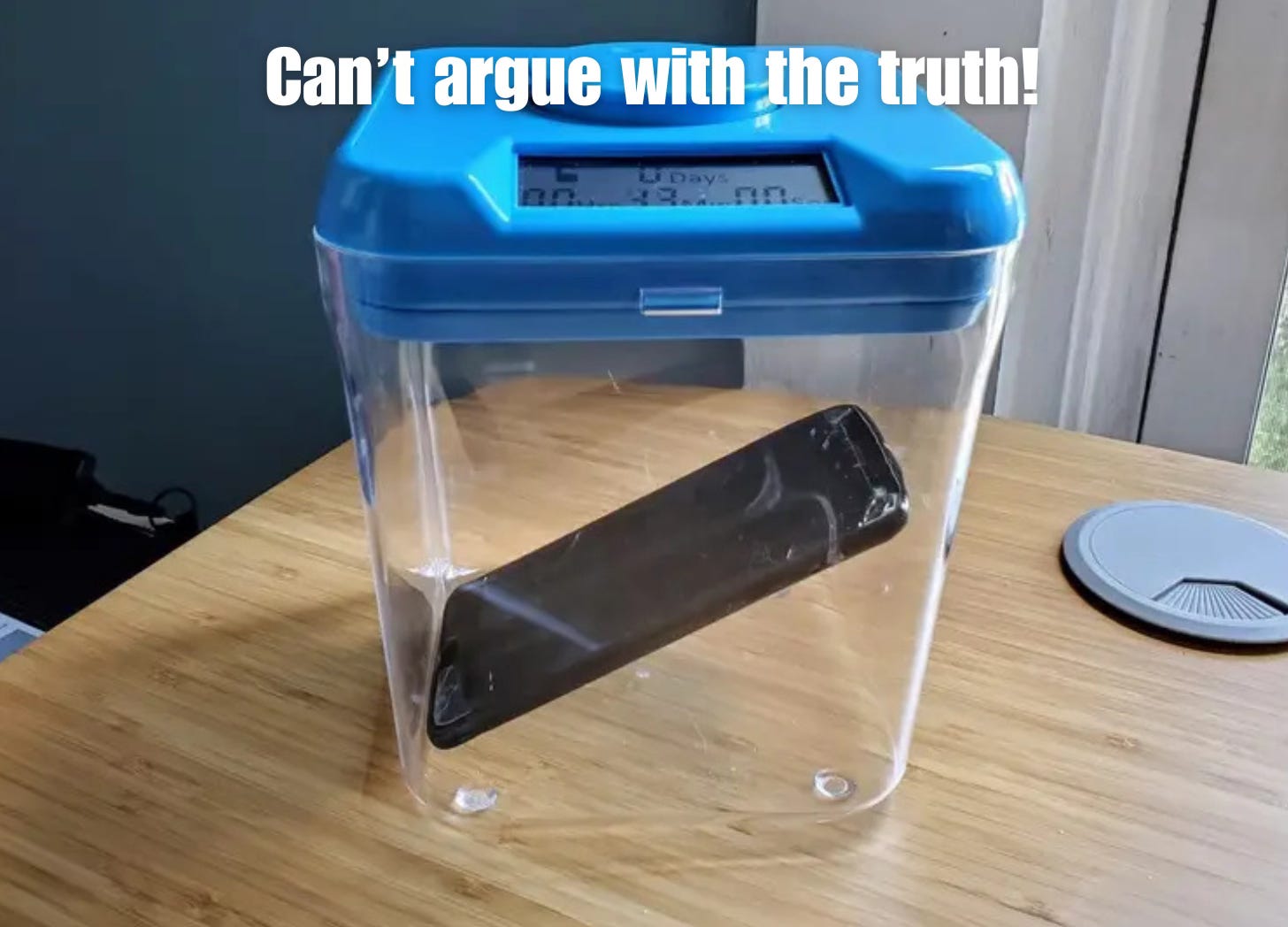
K-Safe
There’s this concept of friction that many people in the digital wellness space speak about, friction fosters mindfulness, by introducing a delay or an obstacle in the way of access to one’s devices, that gives room to think, to breath and maybe just not pick up the device.
After using many different types of software blockers and delay apps, I realised I needed something that I couldn’t override, that gave me no choice. I don’t want to have to deal with the decision fatigue of knowing I can access what I want if I just do this and this and so on. The K-Safe goes beyond friction.
In essence, it’s a small portable box with a timed lock. You set the time, and then, unless you want to use a sledgehammer, you will not be able to access your phone. At night or when I was triggered, this proved invaluable. It's worth its weight in gold.
News Feed Eradicator Applications
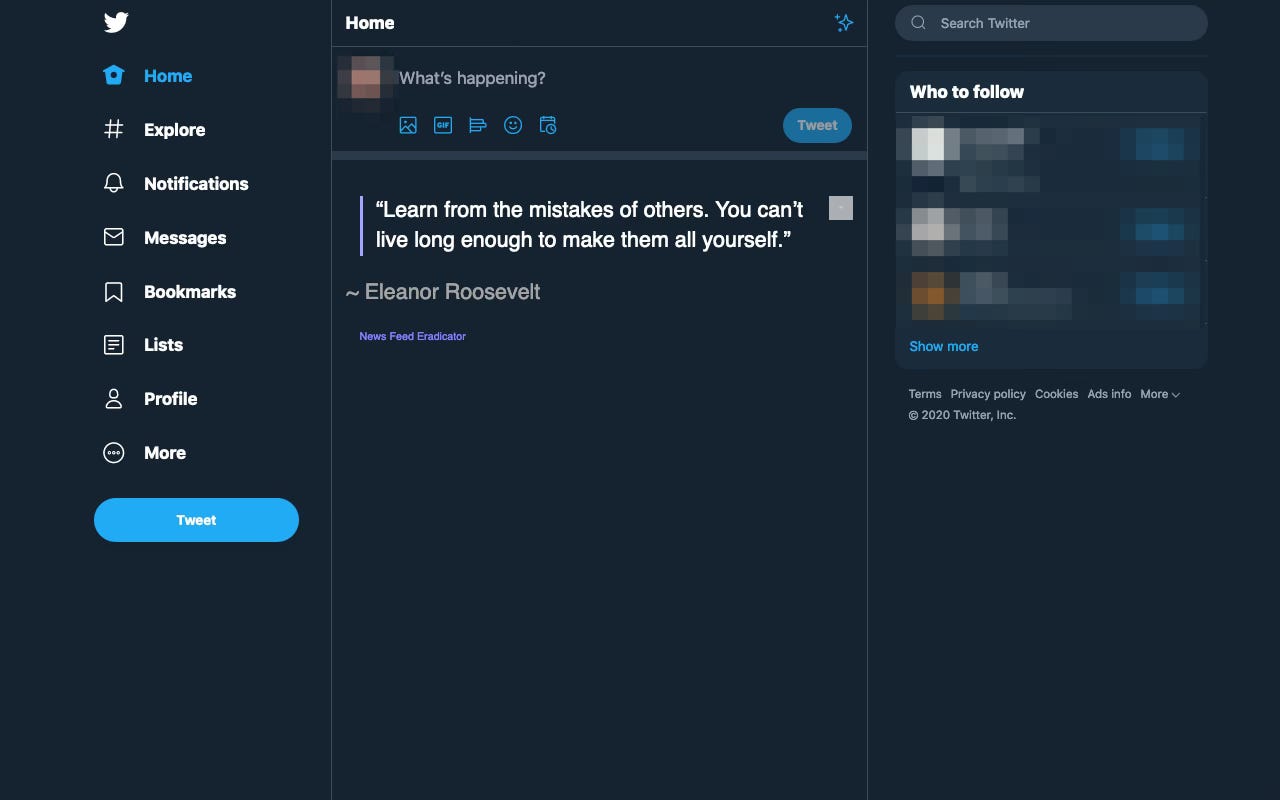
Hands down, this app prevented me from wasting the most time at the beginning of my journey. This application removes the feed from all social media platforms. They includes video sites. It still allows you to post, direct message and engage with individual accounts, however the algorithmic feed does not appear. Honestly, I wouldn’t be surprised if apps like this aren’t banned in the near future, they destroy engagement. It makes social media sites entirely intentional because you must direct what you access. If you can do anything else after reading this article, download this app. There are various versions of this. News Feed Eradicator and Social Focus are the two I would recommend.
SIM card Ejector Tool
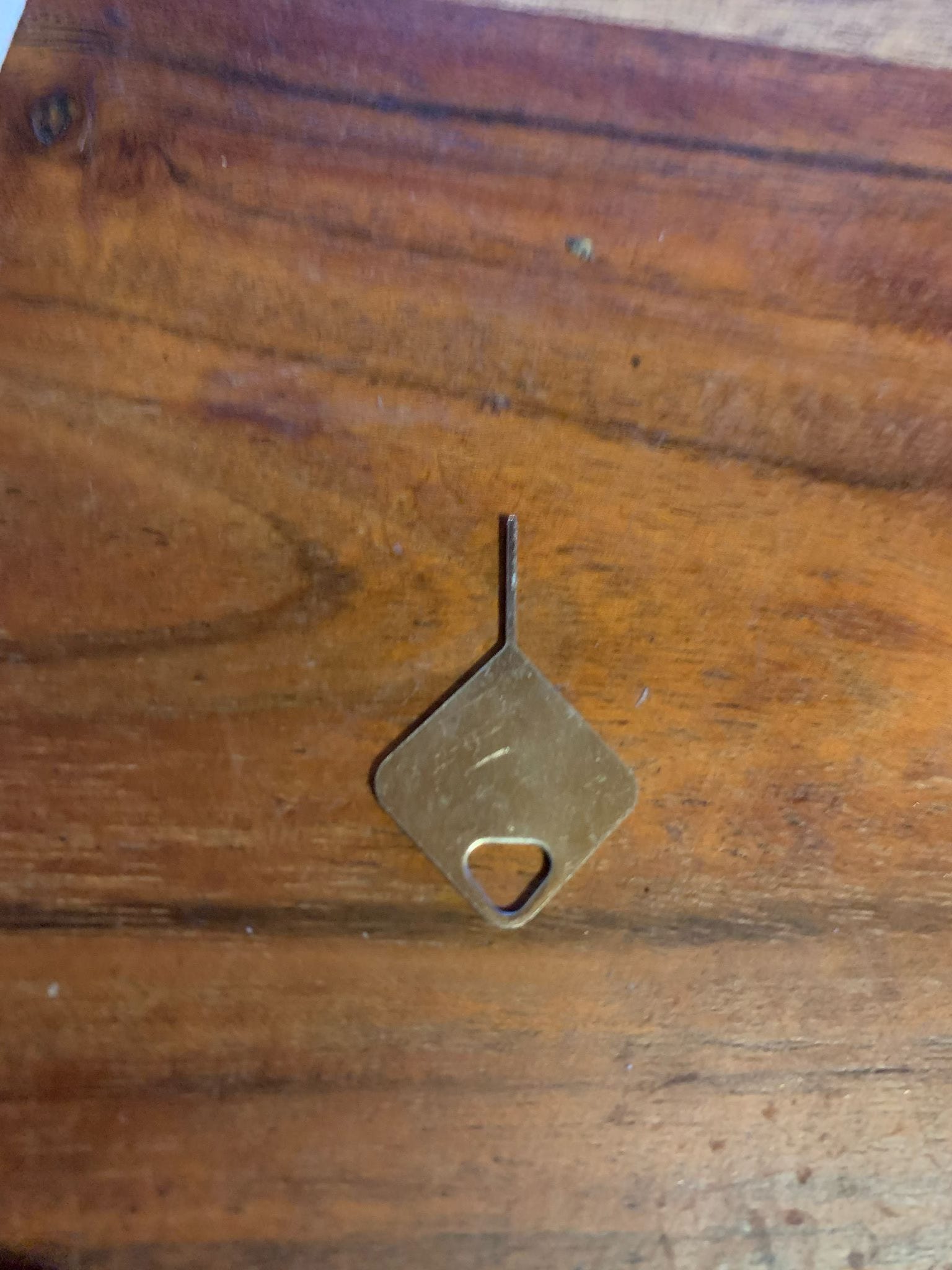
I still have a smartphone, but I use it less and less. I wouldn't own one if I didn’t need it for verification for financial transactions, interacting with various platforms, making video calls, and traveling. The phone applications I need to use (WhatsApp, Telegram) for instant communications can exist on my laptop without needing a smartphone. I now have a Doro flip phone that I carry around with me for phone calls and messages. My smartphone lives in my car, the K-Safe, or a place where I can’t see it.
So this little tool is essential, it allows me to switch between levels of technology when necessary, rapidly.
Retroactive Bullet Journalling
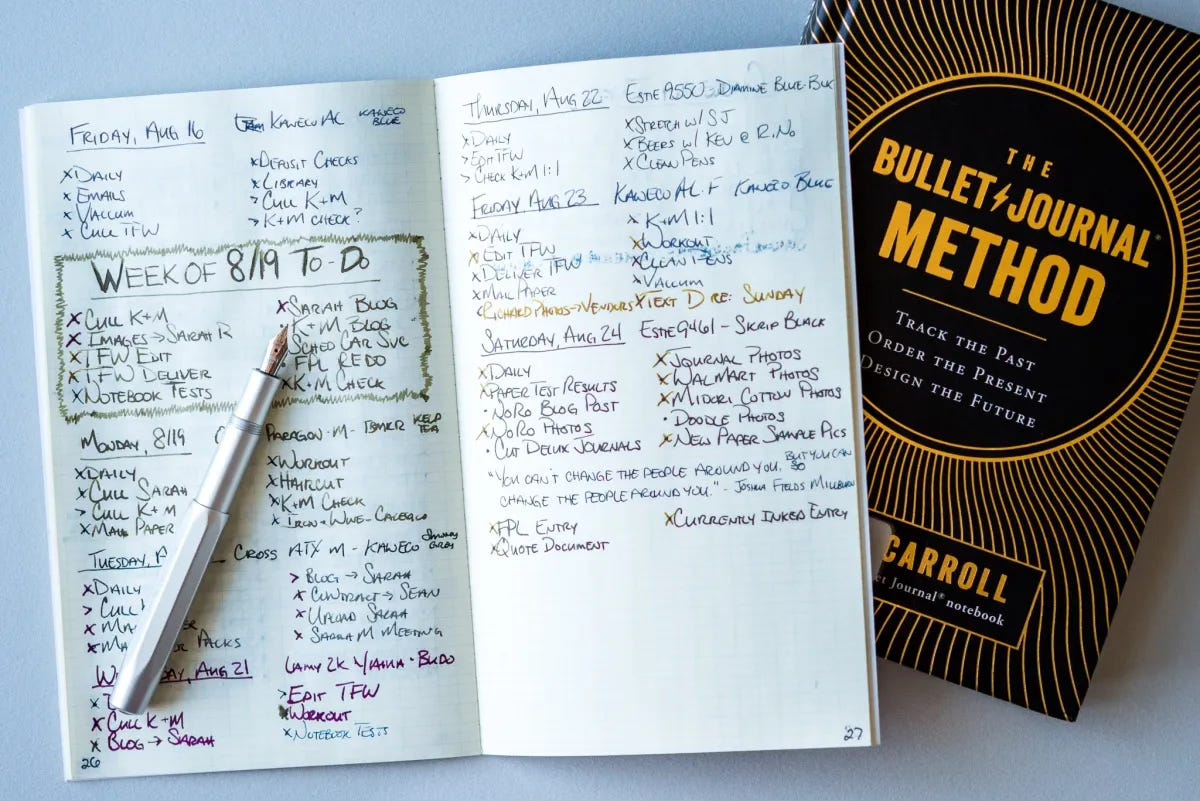
This is an adaptation of Bullet Journal techniques mixed with Anne-Laure Le Cunff idea of Tiny Experiments which I may share about in a future column. I’ve always struggled with a personal long form journalling practise and so I developed this super low-maintance tracking system which I could fill in in bed, without much effort or willpower.
I design daily habit goals around technology use, such as the number of total pick-ups, the amount of total time on my smartphone, and the technology cut-off point before bed. I then track those habits daily using simple symbols next to the day on which I achieved them, and most importantly, the next day, I write brief bullet points about the significant events of the previous day.
As the weeks go on, I notice patterns of achieving goals and failures relating to the events and start to more regularly fulfill my goals. This was an essential activity for me to begin to notice my triggers and the events that lowered my capacity to control my screen time. These triggers were sometimes very obvious (lack of sleep, excessive alone time) and sometimes much less obvious (witnessing a sublime piece of intelligence that triggered my lack of self-esteem, losing a material object, etc.). Through this process I became far more honest with myself, far more realistic about the practicalities of change and more aware of the challenges I faced and how I could overcome them.
Reading Ness Labs over the years taught me to keep those goals small and incremental. Setting up small experiments on myself changed the nature of the game for me, making everything feel less heavy. I have a tendency to self-incriminate, and by viewing each week’s goals as an experiment, I was able to create some psychological separation.
By tracking my new habits regularly, I was able to be far more honest with myself than before, identify my vulnerabilities, and track my progress
Rituals
It took me many years of attending ceremonies of all kinds before their significance began to land deep within me. I was often an ‘attendee’ but not an active participant. Morning rituals, as such, were a bit lost on me. They just seemed like an additional routine, as I understood them. I tried implementing them with mixed success.
The ‘active’ component is the key ingredient that unlocked it for me. It’s the intention that lies behind the ritual, the active thought process that must be renewed every time, that brought me to presence. For example, I created a moment of gratitude at meal times and kept the phone away from my bedroom so that I could be fully present with my partner.
There are many small types of rituals which have helped along the way, each with their own life expectancy, useful for the time that they existed for. Currently I am experimenting with a smartphone ‘landline’, a creative re-imagination of the idea of a phone. I leave the phone at the entrance of my house and I only retrieve it to make phone calls or texts.


Community & Connection
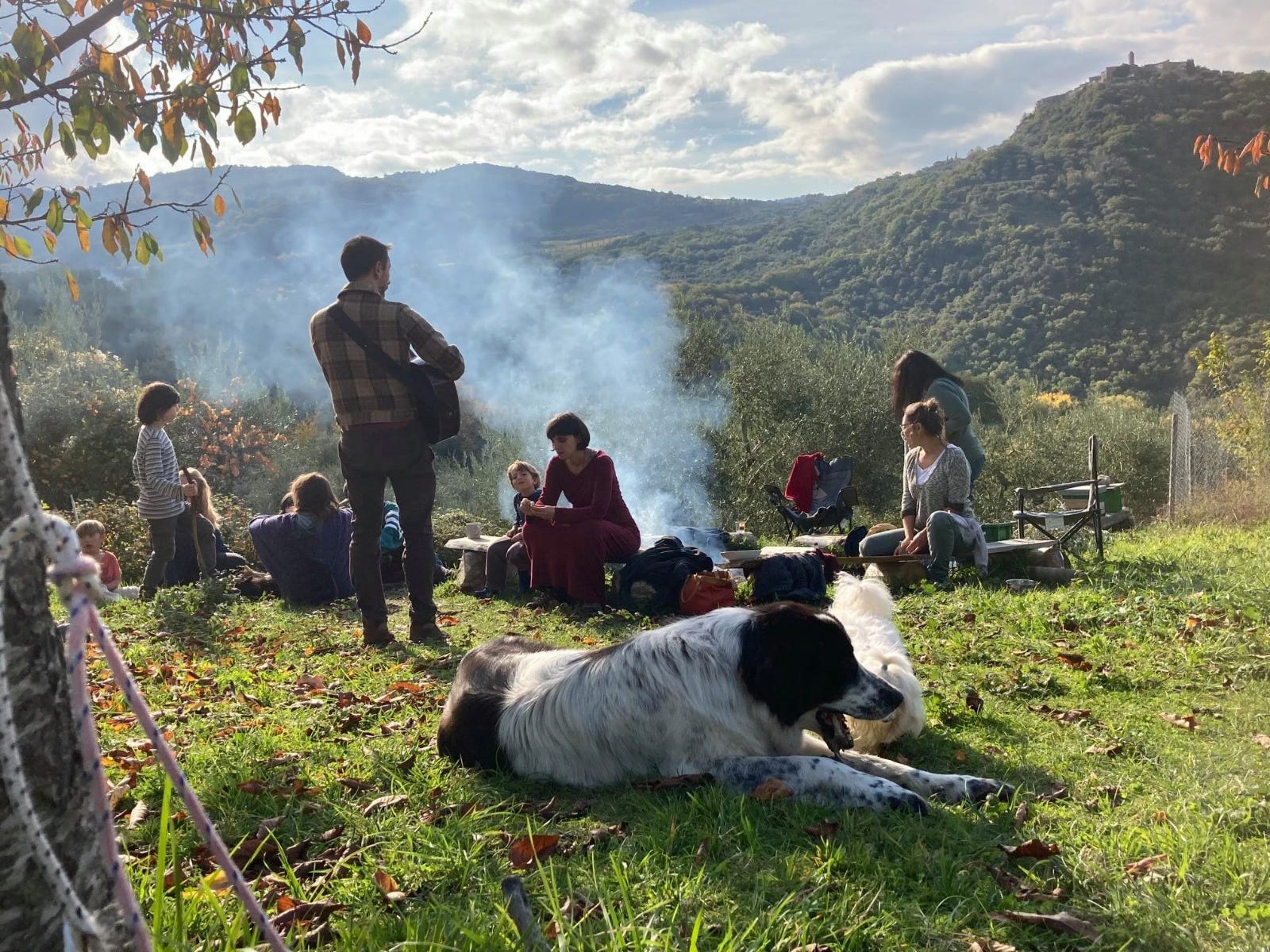
It’s other humans! Who would have guessed that we apes really need each other? We really, really, really need each other right now, considering the algorithmic forces that are drawing us apart when we engage through screens.
Being intimately connected with a group of people, big or small; for myself either through a shared cause which we all cared deeply for or with a group of friends, sharing our lives, intentionally practising slow living, made screens remarkably less attractive to me.
The power of the visceral, the sensuous, the tantalising excitement, the shared journey drew me away from screens.
Having experienced this deeply many times, I now seek out community in all its guises, recognising that it is by no means simple, easy, or always appealing. Humans are messy and challenging creatures, and it can be work to develop relationships, coordinate activities, manage children, and transcend conflict all at once. However, for its sheer capacity to draw us away from screen-mediated disconnection, it’s hard to beat finding your ‘others’.
Freedom (Insert any blocking app)
I hesitate to recommend any blocking application, as I’ve used many of them. They can really help, but whenever I relied on them, I would inevitably find myself back in the same place in a few months, having disabled them or found a way around them and eventually discontinued its use. In the long run they don’t build your tolerance of discomfort, your ability to notice triggers and the understanding in your head that ultimately what lies on the other end of that desire is most likely empty.
However, despite not being the whole solution, they are part of it, and this is the current app that I use, the free version, it’s relatively simple to set up for laptop, covers all desktop browsers and has a neat blocking system that I turn on every work morning.
Thanks for reading this far, if you’ve got this far, that’s plenty of information consumed, you most likely don’t need any more.
Take a deep breath, look away from the screen and consider what you REALLY want to be doing, if that’s improving your relationship with screens, feel free to get in touch.